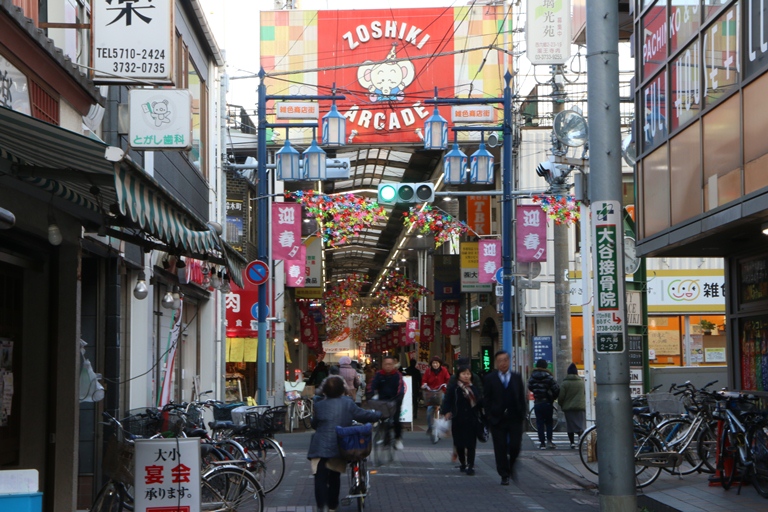
Japan’s school lunches are carefully designed, with constant thought and innovation behind them. To learn more about the people who support them behind the scenes, we spoke with Kokko Shoji Co., Ltd., a food wholesaler headquartered in Higashiyukigaya, Ota City, which has been supplying ingredients for school lunches for more than 70 years.
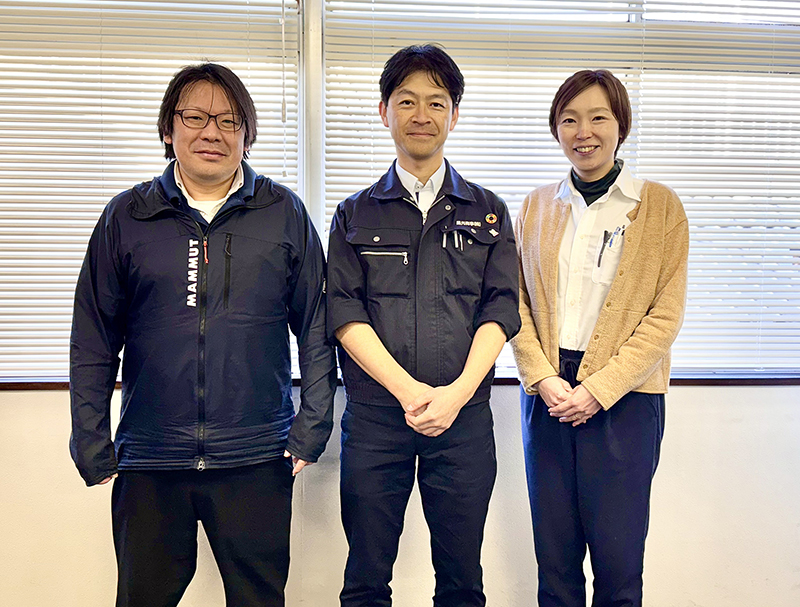 Yoshihiro Matsumoto, Representative Director (middle); Yuji Kondo, Deputy General Manager of the Sales, Manufacturing, and Product Development Departments (left); and Mina Harada, Deputy Manager of the Sales and Product Development Departments and a registered dietitian (right) of Kokko Shoji Co., Ltd.
Q: What kind of company is a school lunch ingredient wholesaler?
Matsumoto:
Yoshihiro Matsumoto, Representative Director (middle); Yuji Kondo, Deputy General Manager of the Sales, Manufacturing, and Product Development Departments (left); and Mina Harada, Deputy Manager of the Sales and Product Development Departments and a registered dietitian (right) of Kokko Shoji Co., Ltd.
Q: What kind of company is a school lunch ingredient wholesaler?
Matsumoto: We deliver ingredients to elementary and junior high schools in Ota City, as well as to schools across Tokyo and Kanagawa Prefecture. Companies that specialize exclusively in school lunch ingredients are quite rare.
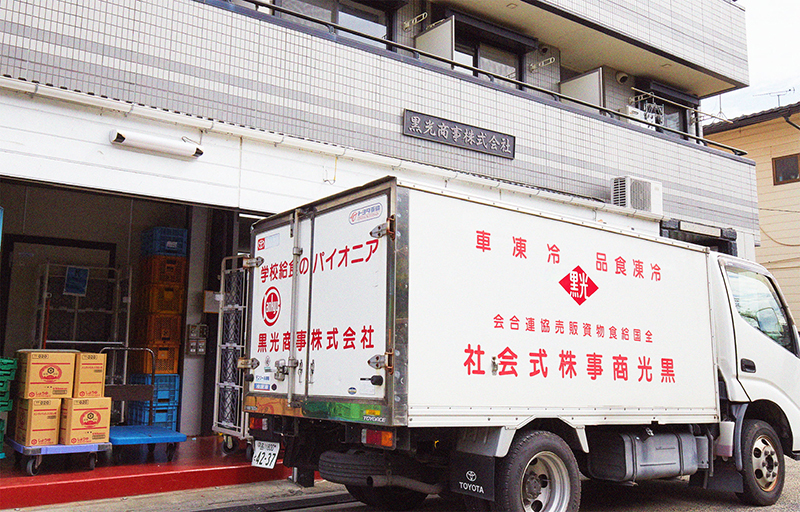 Kokko Shoji Co., Ltd. headquarters, Ota City
Founded in 1959, the same year the School Lunch Act was enacted, our company was established to ensure a stable supply of high-quality ingredients during a time of postwar food shortages.
One of our founders was a former teacher who wanted to “support children’s health through school lunches.” Carrying on that philosophy, we handle ingredients with a strong sense of responsibility, knowing that this is food children eat every day.
Q: What are your top priorities when supplying ingredients for school lunches?
Kondo: Our number one priority is safety. In addition to radiation and bacterial testing, our buyers travel throughout Japan to meet farmers in person, learning about their growing methods and production environments. We also carefully select seasonings and processed foods that are low in additives and safe for children to consume daily.
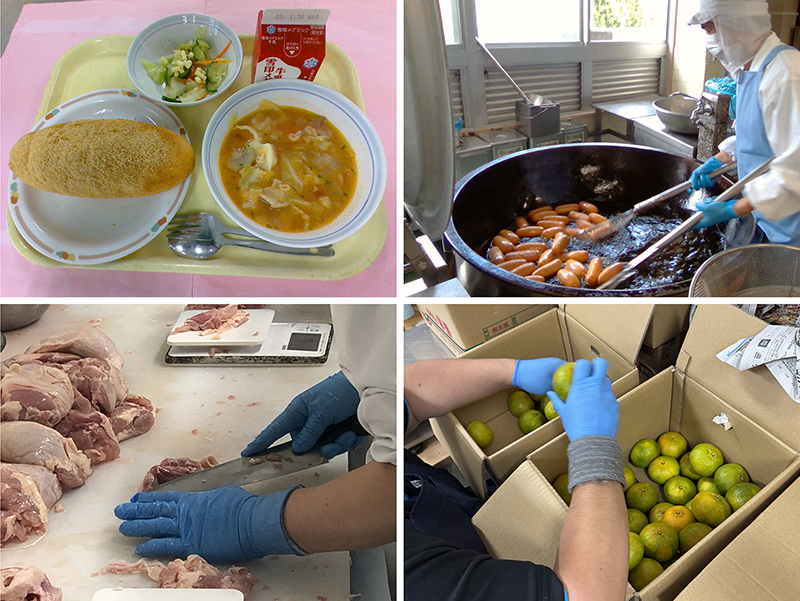
One of the ingredients we place particular emphasis on is Gakkyutori, a specially produced chicken for school lunches. It is raised without antibiotics or antibacterial agents and in low-stress environments, resulting in a distinctive flavor and texture.
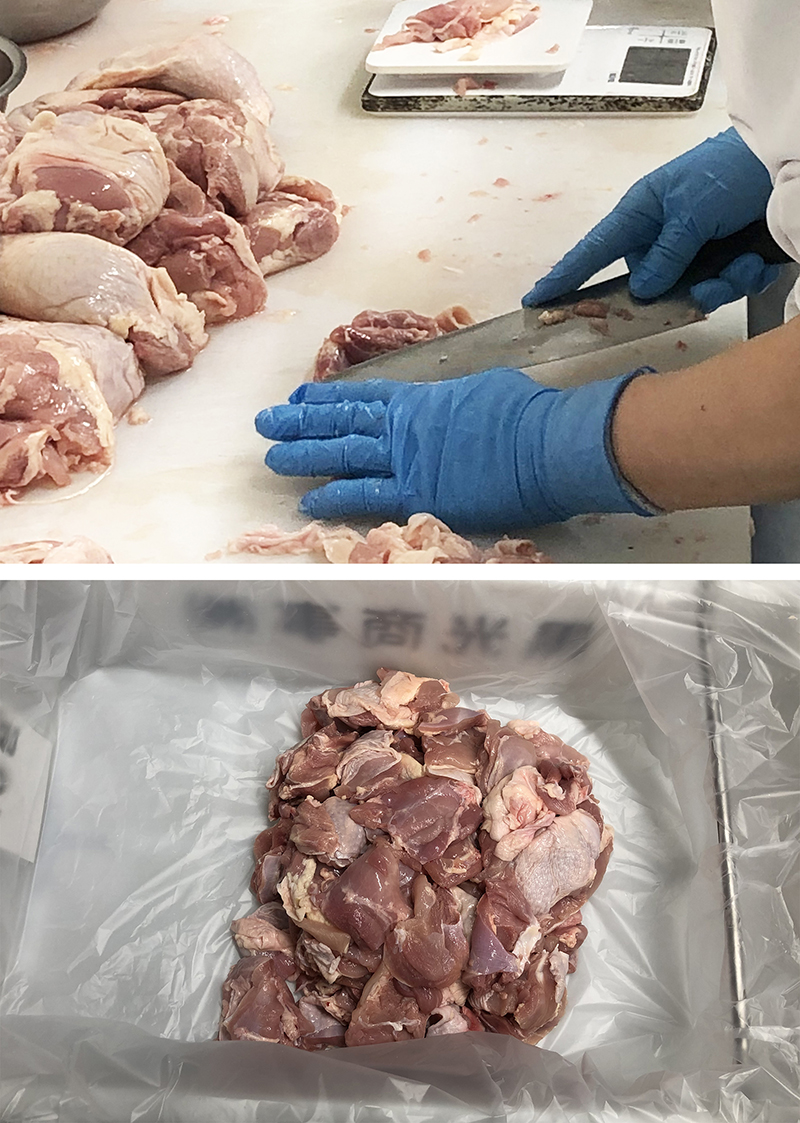 Gakkyutori being cut into school-lunch-size portions at our in-house processing facility.
Although these ingredients cost more, we only supply products we truly trust. Many producers share this commitment and work closely with us to make it possible.
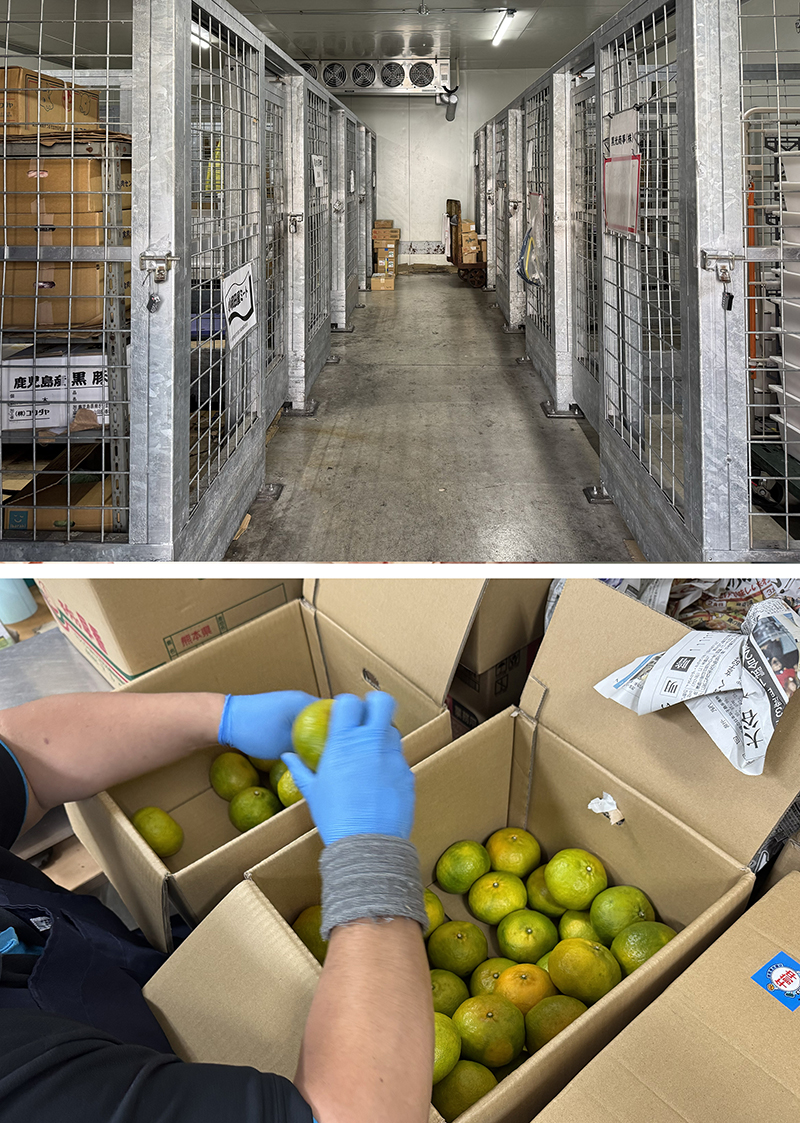 A warehouse in Kawasaki City, Kanagawa Prefecture, where ingredients are picked and prepared for delivery. Large refrigerators and freezers are used to maintain freshness (top). Mandarins are visually inspected one by one (bottom).
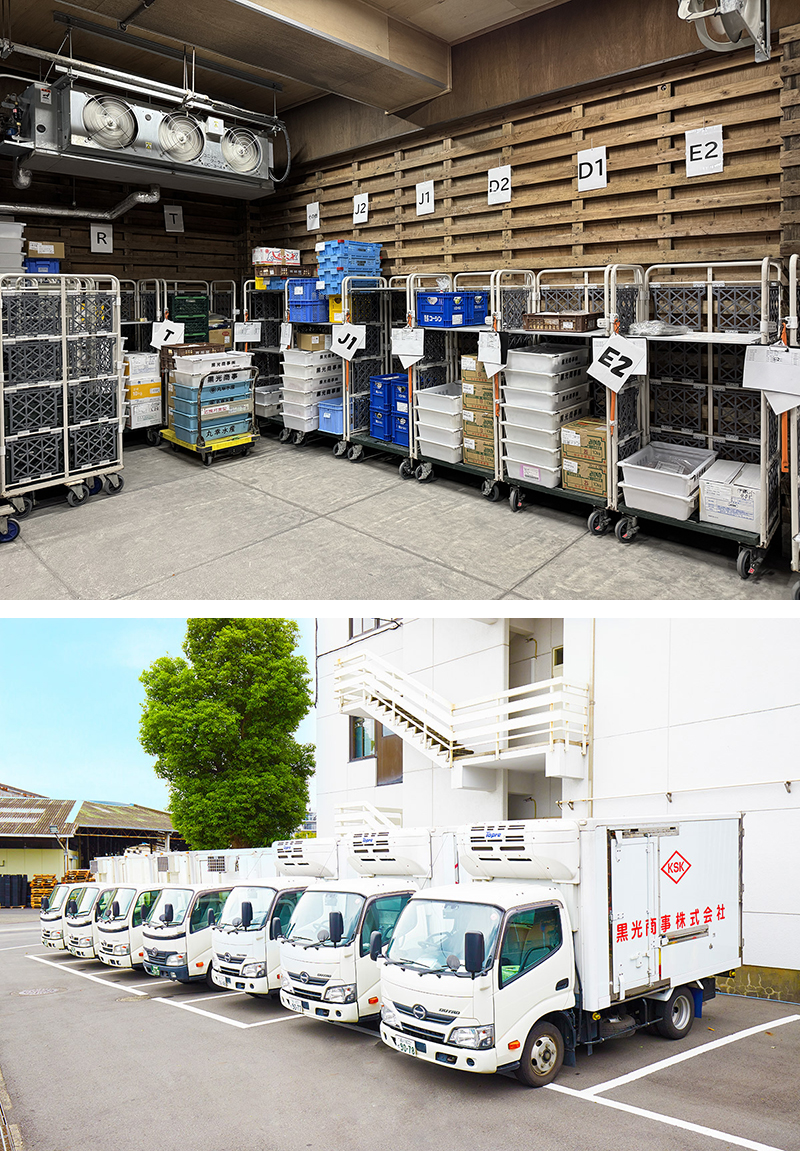 Ingredients prepared for delivery to each school line the storage warehouse (top). Delivery preparation begins at 5:00 a.m.
Q: I understand you are also deeply involved in food education.
Matsumoto:
Ingredients prepared for delivery to each school line the storage warehouse (top). Delivery preparation begins at 5:00 a.m.
Q: I understand you are also deeply involved in food education.
Matsumoto: At the request of schools, we offer hands-on learning programs. These include corn-husking activities for first and second graders as part of life studies, as well as lessons for fifth graders on the differences between wild-caught and farm-raised fish, linked to social studies classes.
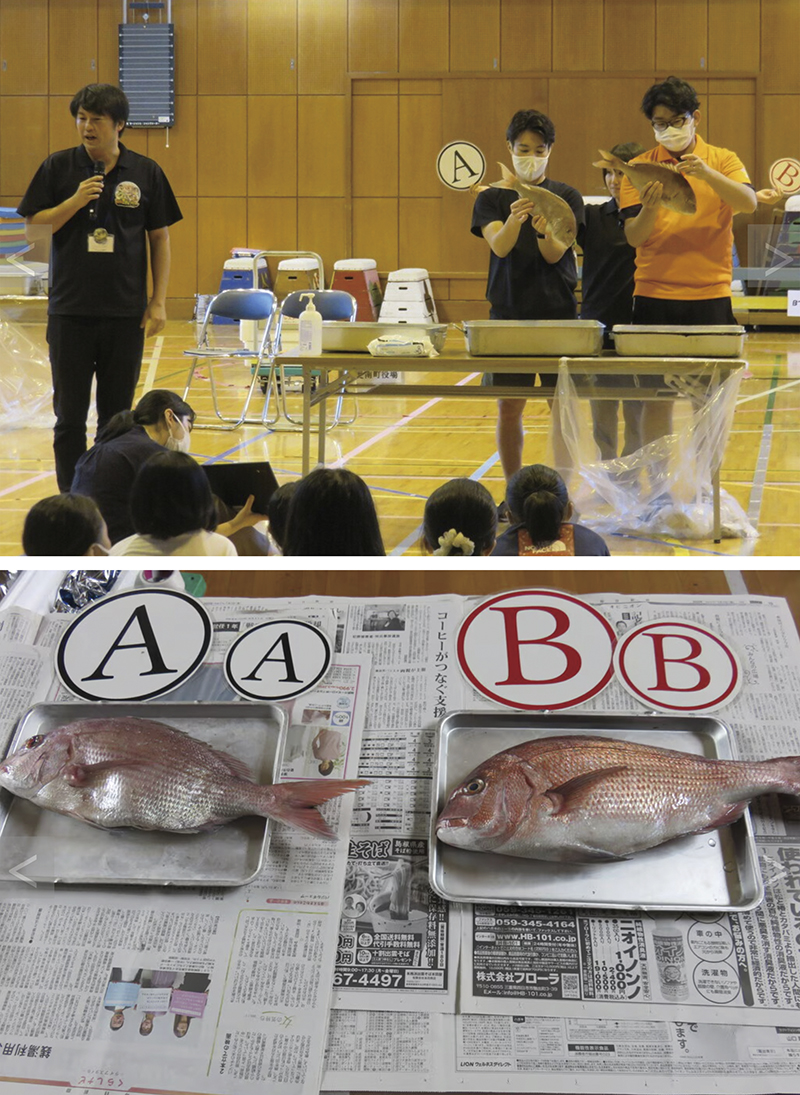 A class connected to fifth-grade social studies
Through these activities, we teach children that food represents life itself.
Today, there are fewer opportunities for children to see how vegetables are grown or how livestock is raised. That’s why we also ensure our own staff regularly visit farms, livestock facilities, and meat processing plants, so they can fully understand the processes behind the food.
Only by recognizing that we are “receiving life” ourselves can we truly convey the meaning of the phrase itadakimasu (thanks for the food) to children.
Q: What is your vision for the future?
Harada: Opportunities to grill fish or cook traditional ingredients like hijiki seaweed and kiriboshi daikon at home are becoming increasingly rare. If this trend continues, Japan’s domestic food culture and production could be at risk. That is why I believe school lunches play a vital role in preserving Japanese culinary traditions.
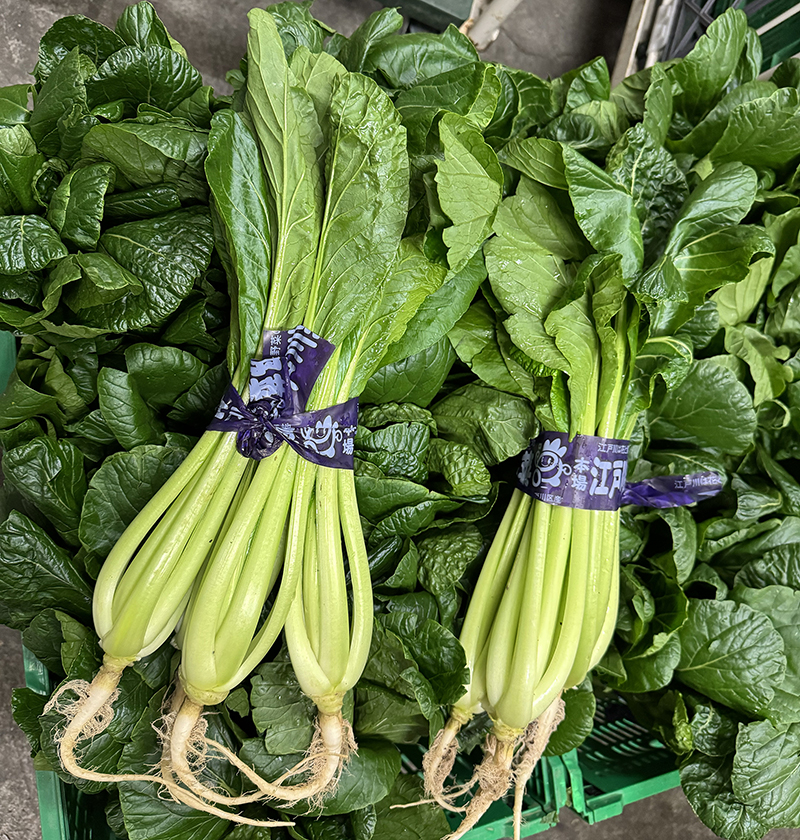 The company also works closely with farmers on initiatives such as local production for local consumption and cultivation methods suited to school lunches.
In addition, we work to provide information that can support nutritionists in menu planning. Through school lunches, we hope to help pass Japan’s food culture on to future generations.
Creating Healthier School Lunches through University Collaboration
To further support children’s health, Ota City has previously partnered with Toho University to develop school lunch menus.
The collaboration focused on two key themes: reducing salt intake and addressing picky eating. Menus developed through this initiative were shared with all schools in the ward and incorporated ideas such as using ingredients with rich aromas to enhance flavor while reducing salt, as well as including fiber-rich foods.
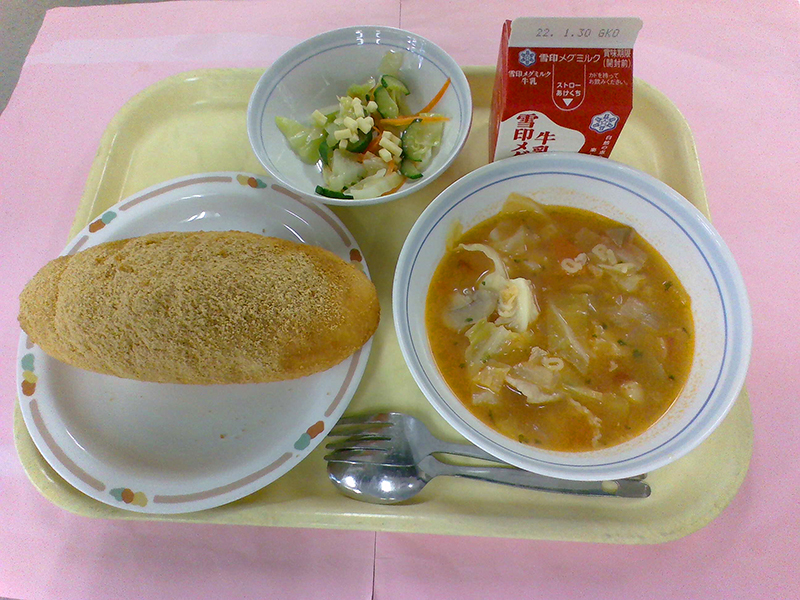
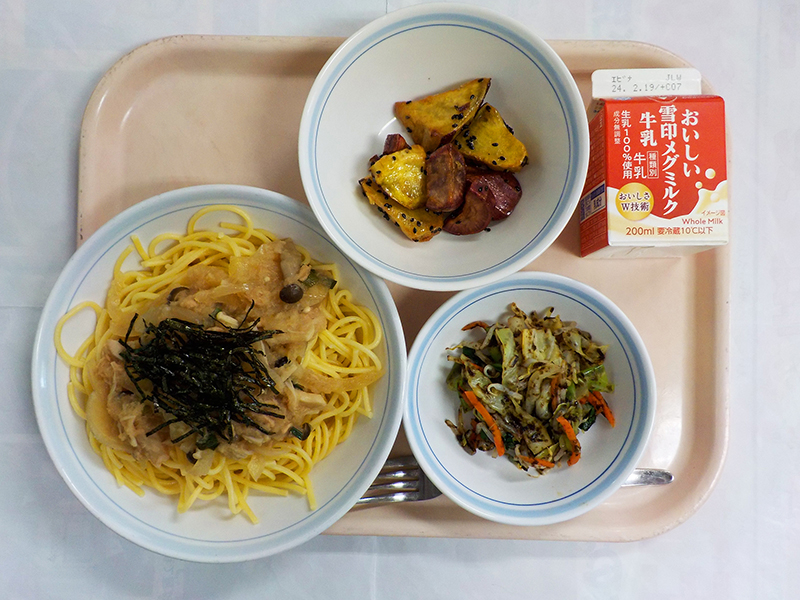
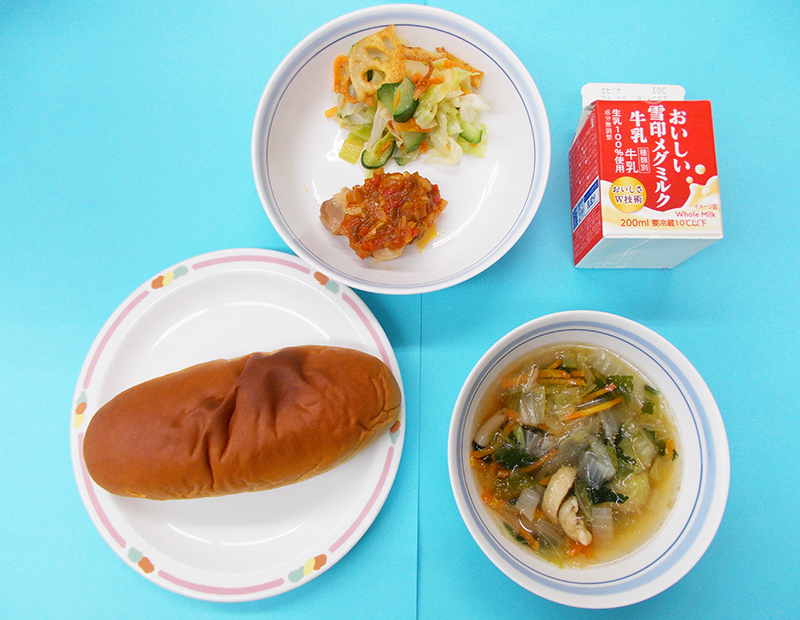 Example of a menu developed in collaboration with Toho University: Brown sugar bread, chicken salsa, lotus root chip salad, Chinese cabbage and chicken soup, and milk.
School lunches are made possible through the dedication and cooperation of many people. We invite you to share your favorite school lunch memories on social media. Don’t forget to use the hashtag #uniqueota!
Ota City promotion website
“Unique Ota” delivers information about the appeal of Ota City with the keywords “a town where you can encounter unique locations unlike anywhere else, which can only be found in Ota City.”
We encourage you to dig deep to find the contents you are interested in. Check back soon for the next edition!